Heavy Rain, Flooding, and Chance of Severe Weather Staring Down the Southern U.S.
January 22, 2024
Posted: July 9, 2022 10:48 pm




Justin Sullivan/Getty Images News via Getty Images
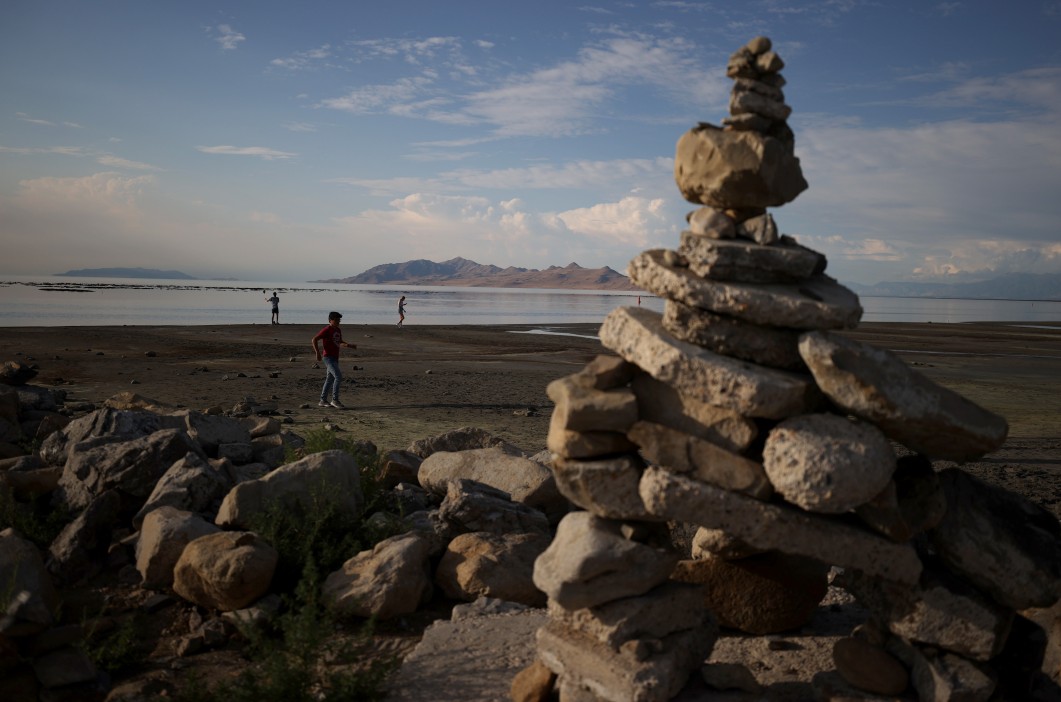
Utah’s Great Salt Lake, the largest saltwater lake in the Western Hemisphere, reached a historically low level during Independence Day weekend. Officials are now predicting that the lake will see increased drops in water levels over the next few months as well.
The U.S Geological Survey’s gauge at the Great Salt Lake measured the Great Salt Lakes’ water levels at 4,190.1 feet on Saturday, July 3. The gauge, located at the southern end of the lake is permanently situated at the Saltair Boat Harbor.
Around the same time period last year, that gauge recorded the Great Salt Lake’s average daily levels at 4,191.3 feet. Measurements through October 2021 showed the water level dropping to 4,190.2 feet.
Utilizing these previous measurements, officials at the U.S.G.S. prognosticate that the water levels at Great Salt Lake will continue to plunge until storms associated with late fall and early winter become commonplace. Another factor affecting lake levels is the end of agricultural irrigation around the end of summer.
One major factor in the levels of the Great Salt Lake is the current – and persistent – drought in the Western United States. ABC4 news station in Utah reports that, as of mid-June 2022, 99.8 percent of the state of Utah is experiencing either “severe” or “extreme” drought conditions. At least six percent of the state is experiencing an exceptionally dry year concerning drought conditions.
Officials say that not only is the drought affecting water levels at the Great Salt Lake, but climate change and Bear River Watershed diversions are contributing to the depletion of water levels in the Lake. The executive director of Utah’s Department of Natural Resources, Joel Ferry, remarked, “This is not the type of record we like to break.”
Ferry said, as part of a statement released by the U.S. Geological Survey, “Urgent action is needed to help protect and preserve this critical resource.” Ferry went on to describe the Lake’s current situation as “in trouble,” and he also related that his agency is working with stakeholders in an effort to utilize resources and take action to prevent a disastrous situation from occurring.
An example of the trouble that the Great Salt Lake is in can be seen in action taken by The Salt Lake Tribune, one of the oldest continuously published newspapers west of the Mississippi River, to ask a partner news outlet, Accuweather, to direct its mapmakers in redrawing the map of the Lake.
The revamped map showed the Great Salt Lake to be approximately half of its original size. This prompted the journalists at the Tribune to establish an awareness campaign intended to show the public just how much the iconic lake has changed recently. Managing editor of the Tribune, Grant Burningham, said that the maps “need(ed) to reflect what’s going on, and this map (the previous Accuweather map) does not reflect what’s going on.”
Burningham described the historically low water level crisis at the lake as a “death spiral” for the Western Hemisphere’s largest saltwater lake.
Burningham also noted that the lake has always been tied to local ecosystems as well as the state of Utah’s economy. Should the Great Salt Lake suffer further loss, it could affect wildlife as well as strategic mineral extraction. The Great Salt Lake Advisory Council in 2021 said that the lake “contributes roughly $1.5 billion annually to” the economy of Utah.
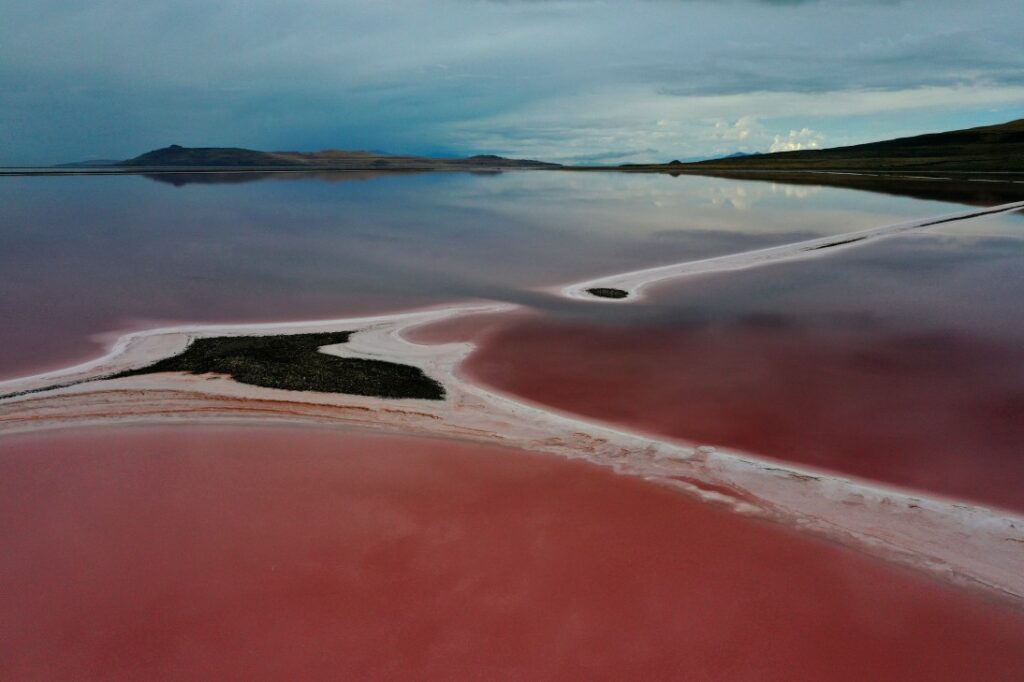
Where wildlife are concerned, more than 7 million migratory birds will utilize the Great Salt Lake as a feeding grounds and a temporary nesting place before moving to their permanent winter abodes.
In 2019, the state of Utah released its assessment on the economic impact a complete eradication of the Great Salt Lake would have on the Beehive State. Utah’s economic experts estimate that the state could lose between $1.69 billion to $2.17 billion annually should the lake dry up. Furthermore, at least 6,500 jobs could be permanently lost in the event the lake ceases to exist.
The assessment said, over two decades, the state of Utah could lose between $25,4 billion and $32.6 billion in the event the lake dries up.
At least 3 million people live in the areas around the Great Salt Lake, and their health could be impacted should the lake dry up. An exposed Great Salt Lake bed could contain arsenic in the remaining dust.
An associate professor at the University of Utah took measurements of the currently exposed lakebed. Stopping to collect samples every 400 meters, the professor – Kevin Perry – found that there are higher-than-recommended levels of arsenic already present in the areas where the lake has dried up.
Perry said that even if the dust from the lakebed itself didn’t contain arsenic, a combination of dust and wind could still present health hazards to those living in close proximity of the Great Salt Lake. Over time, the exposure could cause arsenic poisoning.
Utah state legislators have already begun looking into ways to combat the problem. They voted in early 2022 to commission a study on pumping water in from the Pacific Ocean in order to replenish the body of water before it’s too late. Carl Albrecht, a Utah state representative, said, “Desperate times call for desperate measures.” He also noted that water is growing increasingly valuable in regards to drinking, irrigation, and maintaining sewers. Albrecht remarked that since pipelines are run across the United States for gas and oil production, the same should be considered for bringing water into the Great Salt Lake area.
Unfortunately, the Great Salt Lake isn’t the only large body of water in the Western United States that is experiencing historically low water levels.
Lake Mead, located between Arizona and Nevada, reached its lowest measured water levels since the lake was filled in the 1930s. June measurements showed that the reservoir formed as a result of the Hoover Dam are at disturbingly low levels.
While the Great Salt Lake’s levels have garnered local attention, Lake Mead’s low water levels have gained a national spotlight when the federal government declared a formal water shortage in August of last year. Between June 2021 and June 2022, the measured levels at Lake Mead have dropped another 26 feet. The Bureau of Reclamation states that Lake Mead’s levels are expected to drop much the same as the Great Salt Lake – no respite is in sight until at least November, when the “wet season” begins.
Lake Mead’s historically low levels have exposed a sunken World War II-era boat as well as two sets of human remains. An intake valve has also been exposed due to low water levels at Lake Mead.
The boat in question is a Higgins landing craft that is the same as those deployed during the D-Day Normandy invasion on June 6, 1944. Prior to the water levels dropping, the boat was 185 feet below the surface of Lake Mead. Now, the craft is at least halfway exposed. Higgins landing craft were sold after the war, and this particular boat was used to survey the Colorado River.
The United States has experienced record heat levels during June 2022 with little rainfall, which seem to go hand-in-hand with the drought in the West. Both Lake Mead and the Great Salt Lake have shown measurements of the lakes’ lowest ever water levels.
Did you find this content useful? Feel free to bookmark or to post to your timeline for reference later!

January 21, 2024
January 19, 2024
January 18, 2024