Heavy Rain, Flooding, and Chance of Severe Weather Staring Down the Southern U.S.
January 22, 2024
Posted: July 16, 2022 7:25 am




Images May Provide the Answers to Many Questions About Space and the Universe Around Us
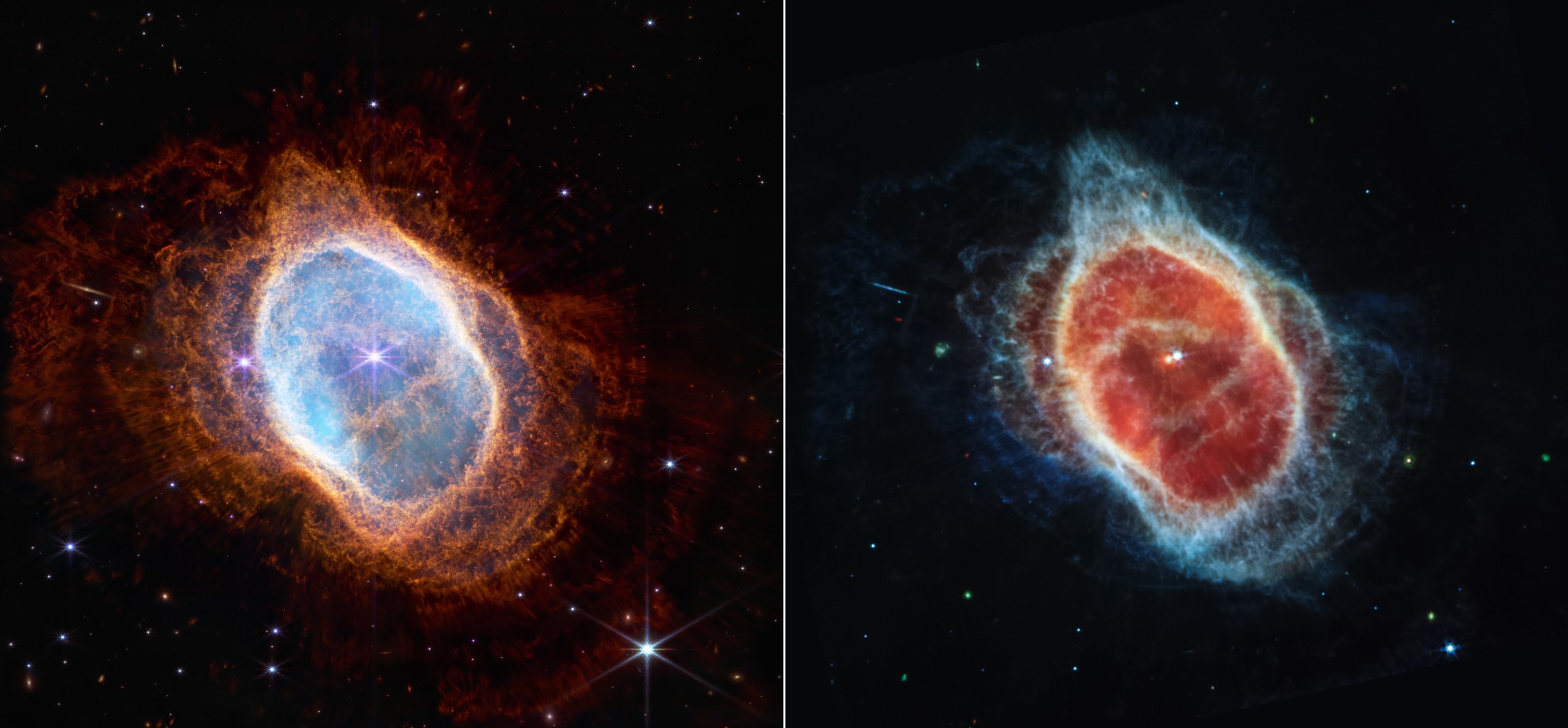
In a reminder of just how small we are in the universe, NASA released a series of full-color images from the James Webb Space Telescope (JWST) this week. The images demonstrate the full beauty of the universe in a way that has never been seen before.
President Joe Biden unveiled the first JWST image on Monday at a special ceremony at the White House. As one of the deepest images of the universe ever captured, the picture looked at a point in space that is 4.6 billion light years away from Earth. This timeline means that the light captured by the JWST was sent from the distant galaxy well before the Earth was formed.
The photo revealed at the White House depicts a cluster of galaxies known as SMACS 0723. The scientific effect known as gravitational lensing helps to bring in focus distant objects for the telescope to capture.
NASA followed up the White House event with its own live stream on Tuesday, revealing even more magnificent images captured by the JWST.
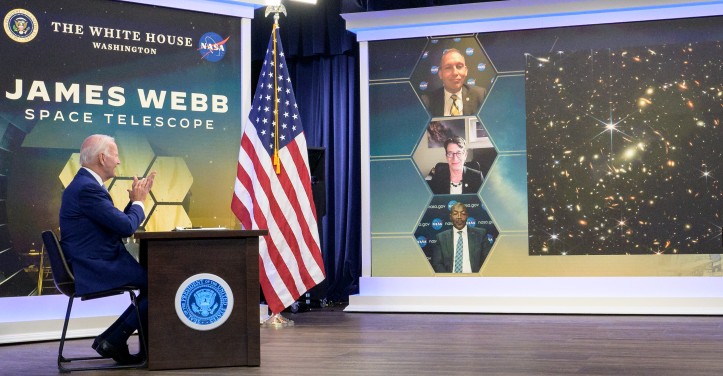
President Biden Previews Image from Webb Space Telescope
This week’s picture release has been months in the making. The JWST was first launched into space on December 25, 2021. The telescope is positioned approximately 1 million miles from Earth and three times farther from the moon. According to experts at NASA, the natural gravitational forces emitted from Earth and the sun mean that the JWST floats around within the same general area without having to rely on a large amount of fuel.
Compare this distance of about 1 million miles to the Hubble Space Telescope, located approximately 340 miles from Earth. The JWST is also exponentially more powerful than its Hubble counterpart. This power will give scientists the ability to go deeper with the image, potentially helping experts to learn more about how planets are formed and the origin of the universe.
The images are being released in partnership with both the Canadian Space Agency and the European Space Agency, making this a global effort.
NASA released more stunning images during Tuesday’s live streaming event, impressing even those individuals with just a passing interest in space exploration. Here are a few of the highlights:
These powerful images captured by the JWST are just the start of what this impressive piece of technology will teach the world about the universe. These pictures could shed new light on the possibility of life on other planets and how the universe came into creation.
Sharing is caring! Did you find this content useful? Feel free to bookmark or to post to your timeline for reference later!

January 21, 2024
January 19, 2024

January 18, 2024