Heavy Rain, Flooding, and Chance of Severe Weather Staring Down the Southern U.S.
January 22, 2024
Posted: April 15, 2022 9:16 am




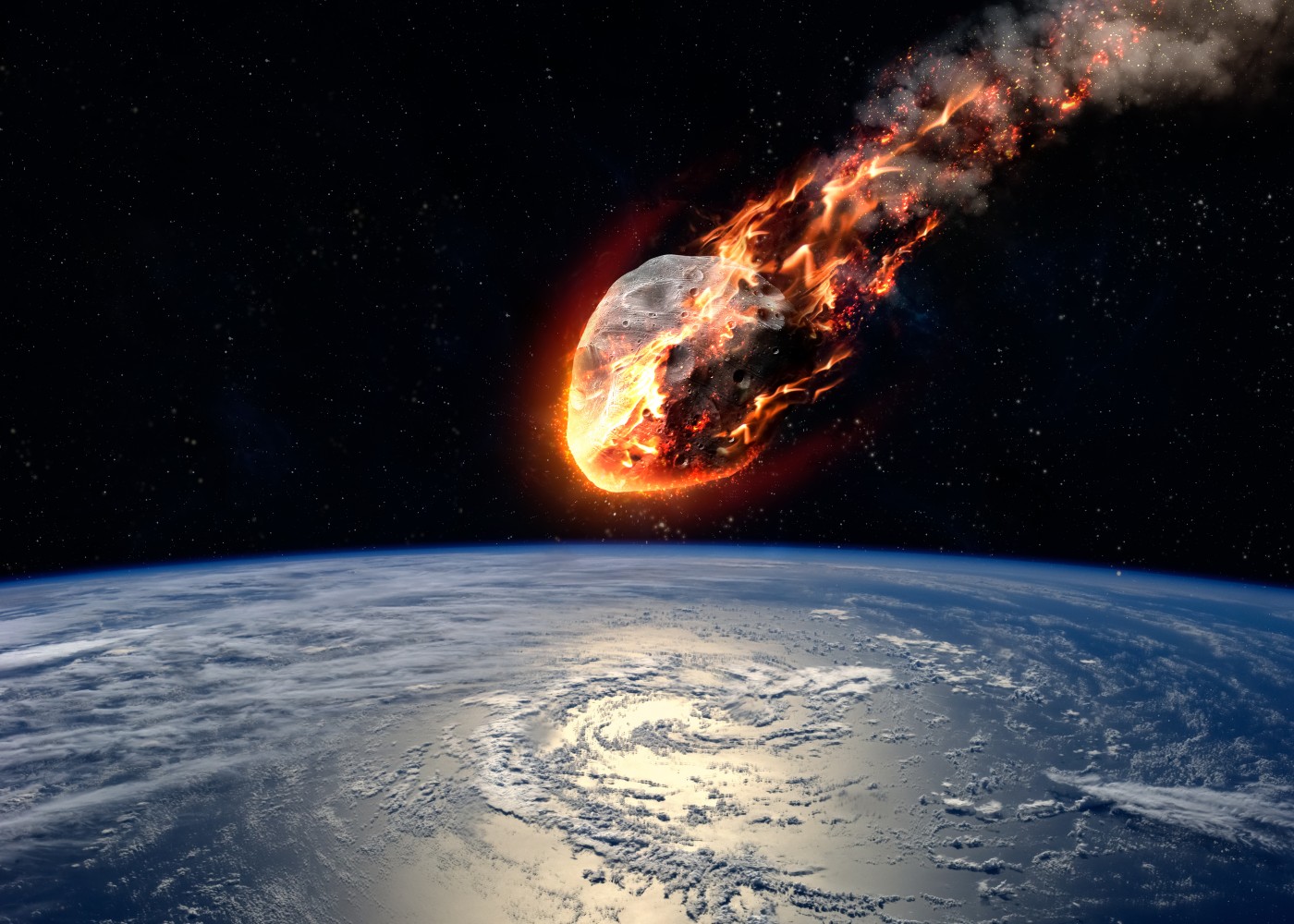
New came from a recently released United States Space Command document. It revealed that the first known interstellar meteor has landed on Earth. By definition, an interstellar meteor is a rock that originated from outside our solar system. It definitely traveled a long way to reach our planet.
Known as CNEOS 2014-01-08, it crashed on January 8, 2014, along the coast of Papua New Guinea.
The origin of the meteor wasn’t discovered until 2019 when Amir Siraj studied a sample. Siraj was researching ‘Oumuamua when he gained interest in CNEOS 2014-01-08. ‘Oumuamua is the first known interstellar object to enter our solar system. It was discovered in 2017.
When Amir Siraj began searching for evidence of other interstellar objects in our solar system, he noticed CNEOS 2014-01-08’s high speed. The meteor was traveling through our solar system at an estimated 28 miles per second before colliding with Earth. This was calculated by how fast it was moving when it hit Earth, meaning it could have been moving even faster. In comparison, the Earth itself is only moving around the Earth at around 18 miles per second.
It is believed that the meteor crashed into Earth while it was moving in the same direction as Earth. This means the impact was less severe than it could have been. By Siraj’s calculations, CNEOS 2014-01-08 was actually moving at around 38 miles per second. He was also able to map out the trajectory of the meteor. He determined that the meteor could only obtain these high speeds if it was not orbiting around the sun. Unlike other meteors, CNEOS 2014-01-08 didn’t have an orbiting cycle. The only conclusion was that it came from outside our solar system.
The road to being published for his findings was long and rough for Siraj. Their data originated from NASA’s database, and these databases don’t divulge on how accurate their readings are.
It took years for someone to confirm their findings. Eventually, John Shaw, deputy commander of the US Space Command, confirmed that Siraj’s findings were correct – the meteor did in fact come from another solar system.
John Shaw informed Siraj via a letter that Dr. Joel Mozer conducted his own reviews and analysis on the data. Mozer is the Chief Scientist of Space Operations Command. Dr. Mozer was able to confirm that the velocity estimate was enough to confirm the proposed interstellar trajectory. Siraj was right.
The letter came to Siraj as a shock. He had moved on from CNEOS 2014-01-08 and started other work. He thought he would never actually know the true origin of the meteor. He confessed that it was a really incredible moment.
Amir Siraj now has a second chance at getting published. He is working to resubmit his findings to scientific journals in another attempt to official be published. With the letter from US Space Command, he now believes he has all the confirmation he requires.
In addition to submitting his work for publication again, Siraj is interested in putting together a team to retrieve other pieces of the meteor. Debris from the meteor is likely in the Pacific Ocean, but the chance of success is not likely due to the size of the project.
Siraj believes that getting his hands on actual pieces of interstellar material could be scientifically groundbreaking. He would be able to discover more about what lies outside our own solar system.

January 21, 2024
January 19, 2024

January 18, 2024